
History and Preservation at The University of Texas at Austin
BY KIM BARKER
This article appeared in Preservation Austin's Spring 2026 newsletter. Join or renew as a member to receive future issues straight to your door!
The University of Texas at Austin stands as one of the most architecturally and historically significant campuses in the United States. From humble beginnings on a 40-acre tract known as “College Hill” to its current sprawling campus, UT reflects more than a century of academic and architectural ambition. Today, preservation efforts ensure that this legacy remains intact for future generations.
Origins: The Forty Acres and Old Main
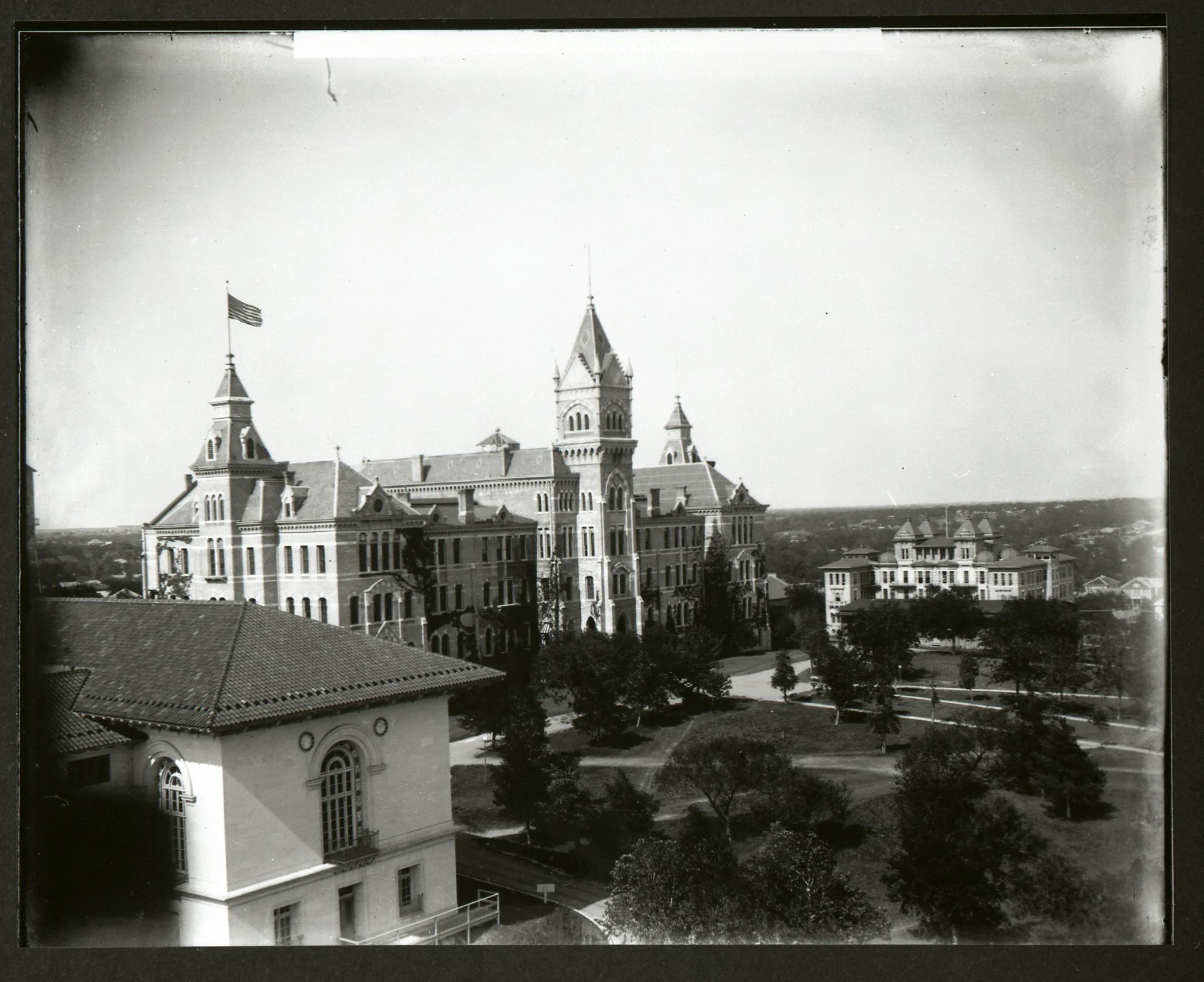
Early UT with Old Main in the center and Battle Hall in the foreground
When Austin was first laid out in the 1840s, a 40-acre site was reserved for a college on a hill bounded by 24th Street on the north, Speedway on the east, 21st Street on the south, and Guadalupe Street on the west, and situated less than a mile from the Texas State Capitol. This placement symbolized the connection between education and governance. Although the 1876 Texas Constitution mandated the creation of a “university of the first class,” UT did not open its doors until 1883. The first permanent building, now referred to as Old Main, was constructed on the highest point of the Forty Acres. Designed by Frederick Ruffini, Old Main was a Gothic Revival structure that housed classrooms, offices, a library, and gymnasium—serving as the heart of the University during its formative years.
Early Campus Landscape and Architecture
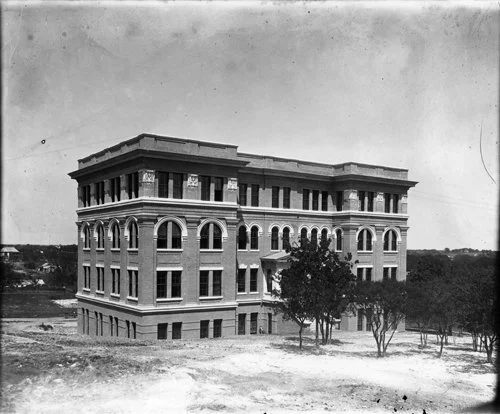
Gebauer Hall, the oldest purpose-built UT building on campus, soon after it was completed in 1904 (courtesy of the Briscoe Center for American History)
The early campus landscape was informal and pastoral, characterized by tall grass, bluebonnets, and a tree-lined walkway at its boundary. Campus soon outgrew Old Main and development around the turn of the century included Brackenridge Hall (1890), the Women’s Building (1903), and Gebauer Building (1904). These structures featured yellow brick masonry, limestone detailing, and a mix of arched and square windows. Many were designed by the firm Coughlin and Ayers, whose work reflected the architectural trends of the late nineteenth and early twentieth centuries. Of these, only the Gebauer Building remains, making it the oldest purpose-built UT Austin building still standing.
A major turning point came in 1910, when UT appointed renowned New York City-based architect Cass Gilbert to shape the campus fabric. As UT’s architect, Gilbert introduced a new architectural language, establishing the Spanish-Mediterranean Revival style that now defines the University’s architectural identity. Gilbert first built Battle Hall, completed in 1911 as the University’s first free-standing library building, followed by Sutton Hall in 1917. With their red clay tile roofs, smooth stone, and decorative terracotta, and Sutton Hall’s extensive use of brick, these buildings marked UT’s move into a more modern architectural era.
Following Gilbert, Dallas-based Herbert M. Greene became UT’s consulting architect during the 1920s. Greene’s designs adhered to the styles introduced by Gilbert, featuring clay-tile roofs, arches, a combination of smooth stone and brick, and decorative terracotta. Biological Laboratories (1924), Garrison Hall (1926), Welch Hall (1930), and Waggener Hall (1931) exemplify this era. Under Greene, building decoration often reflected the building use and Texas themes, with native plants on Biological Laboratories (biology), cattle brands on Garrison Hall (history), and science equipment on Welch Hall (chemistry). Greene’s work was also the first to extend beyond the original Forty Acres, expanding the University’s footprint, with the Power Plant (1927), Littlefield Dormitory (1927), and Gregory and Anna Hiss gyms (1930), all of which remain integral to central campus today.
Paul Cret and the Comprehensive Master Plan
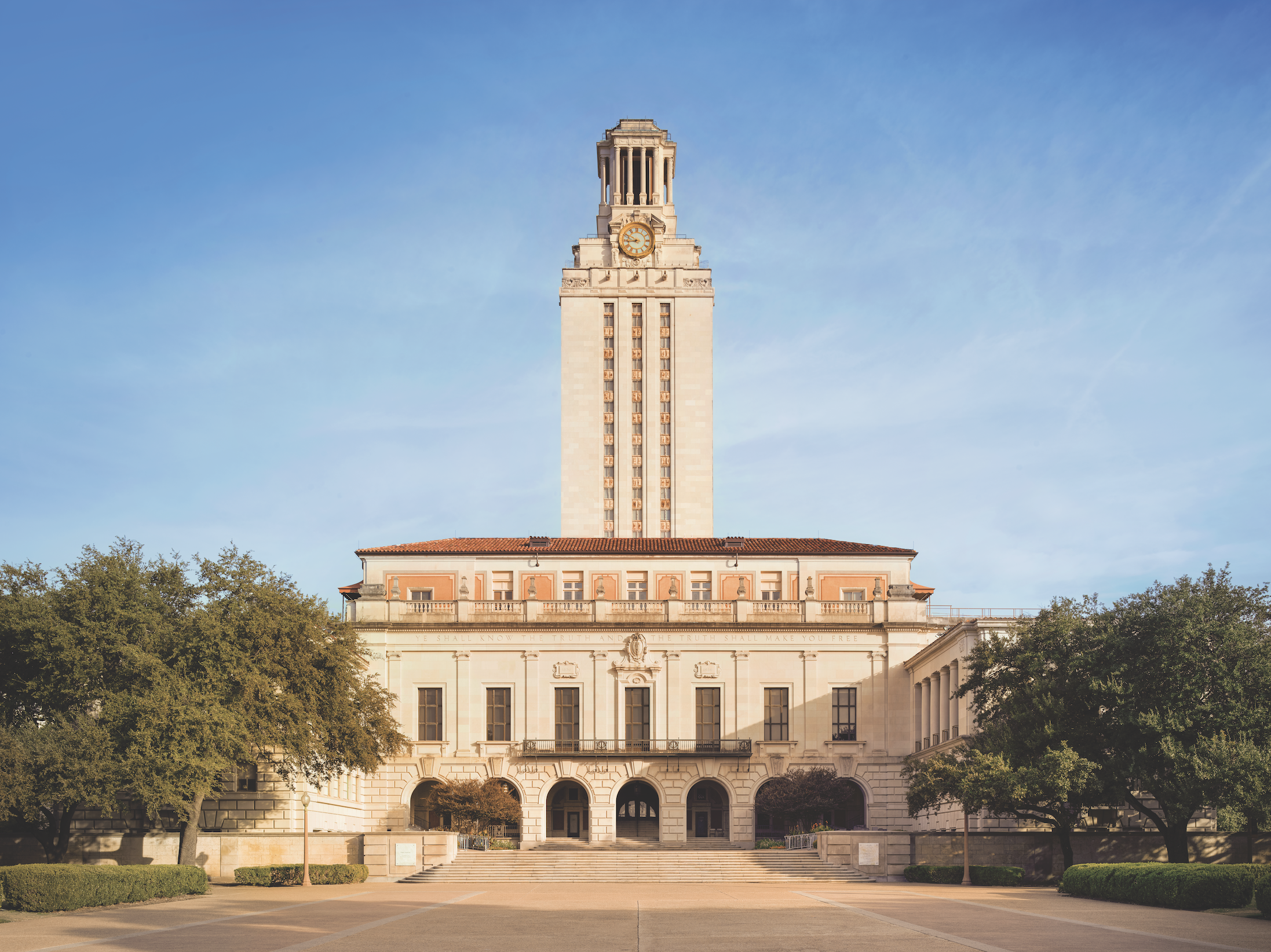
Main entrance to the Main Building and Tower (Casey Dunn for The University of Texas at Austin)
In 1930, UT hired Paul Cret, a French-born architect educated at the École des Beaux-Arts, to develop a comprehensive campus master plan. Building on Gilbert’s earlier vision, Cret introduced an orderly layout of buildings, roads, and open spaces that emphasized symmetry, clarity, and functionality. His plan organized the campus around a central Main Building and incorporated malls and plazas designed to channel natural breezes, a necessity before air conditioning. He grouped buildings by use—academics, housing, and athletics. Despite being conceived during the Great Depression, Cret’s plan moved forward thanks to the University Permanent Fund, supported by West Texas oil discoveries.
Cret was soon hired as the University’s next architect, and his first major project was the Main Building and Tower, fully completed in 1937. This complex replaced Old Main and was originally conceived as the new University library, housing the collection that had long outgrown Battle Hall. The Tower—larger than the library’s functional program required—has since become the University’s most iconic symbol.
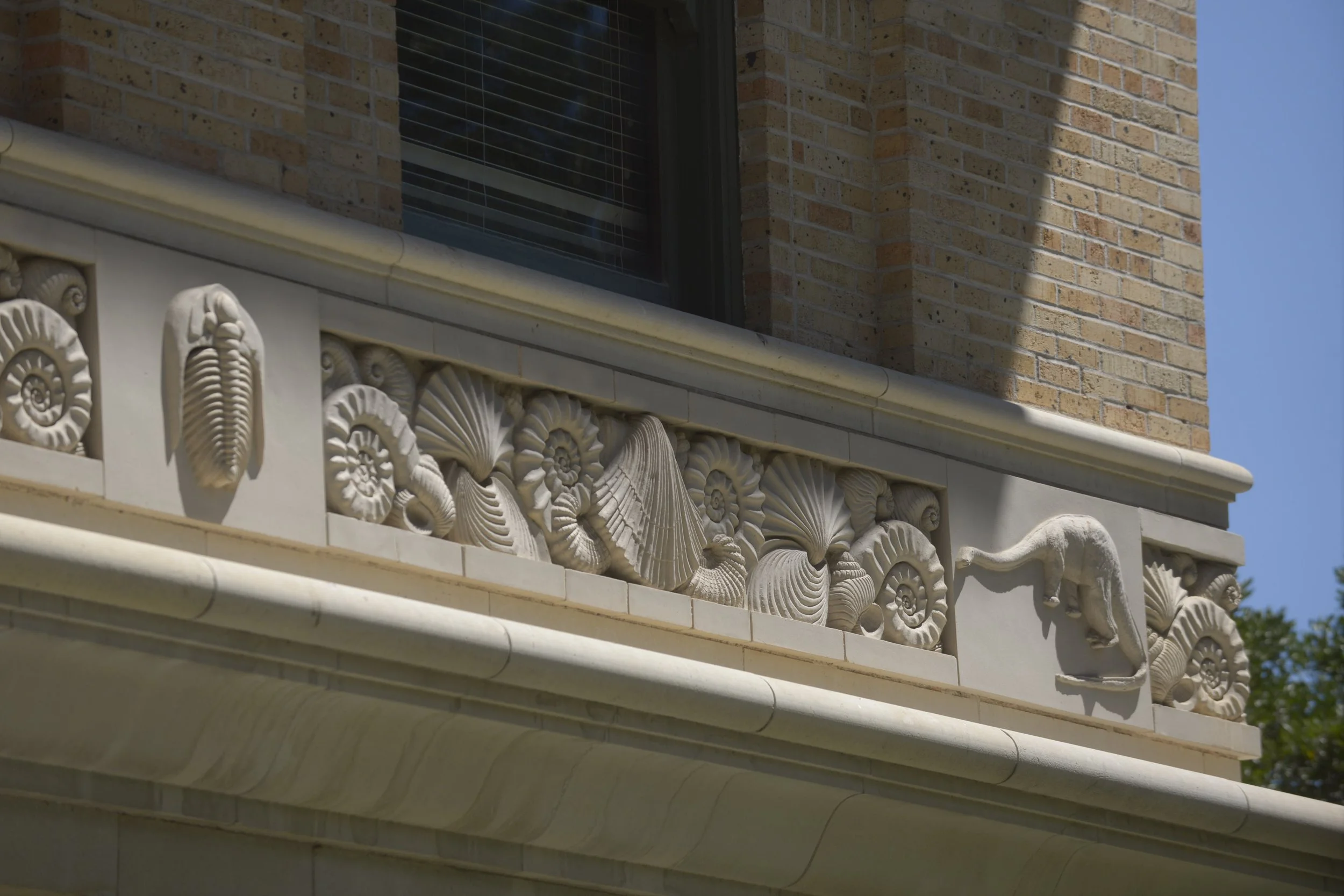
The Hogg Building's decorative theme reflects its original use as the Geology Building (courtesy of The University of Texas at Austin)
Blending modern and classical elements, the building reflected UT’s forward-looking yet enduring identity. Its ornamentation reinforced the young university’s aspiration to join the world’s great centers of learning: terracotta cartouches depict 12 renowned universities, while 14 “men of letters” are carved into the east and west walls. Additional details reflected the building’s original use as a library, including the inscription “Ye shall know the truth and the truth shall make you free” above the south entrance, and letters from five languages—Egyptian hieroglyphics, Phoenician, Hebrew, Greek, and Latin—on the north side of the building.
The 1930s marked a major building boom for UT, with numerous structures designed by Cret with his collaborators, including Goldsmith Hall (1932), Gearing Hall (1932), the Will C. Hogg Building (1932), and Painter Hall (1933) with Greene, LaRoche & Dahl; Hogg Memorial Auditorium (1933) and the Union Building (1933) with Robert Leon White; and the Texas Memorial Museum (1937) with John Staub. Cret also designed many of the early residence halls, including Brackenridge (1933), Roberts (1936), Andrews (1936), Carothers (1937), Prather (1937), and Hill (1939), working with the same group of architects.
Each building adhered to the stylistic principles of Cret’s master plan, featuring brick and stone facades, clay-tile roofs, and ornamental details. Towers, balconies, and wide, painted eaves enhanced architectural interest. Decorative programs frequently referenced each building’s original purpose. Reliefs of comedy, tragedy, and satyr appear above Hogg Memorial Auditorium’s entrance, while the Will C. Hogg Building, initially used as the Geology Building, features fossil and mineral motifs.
Current Preservation Projects
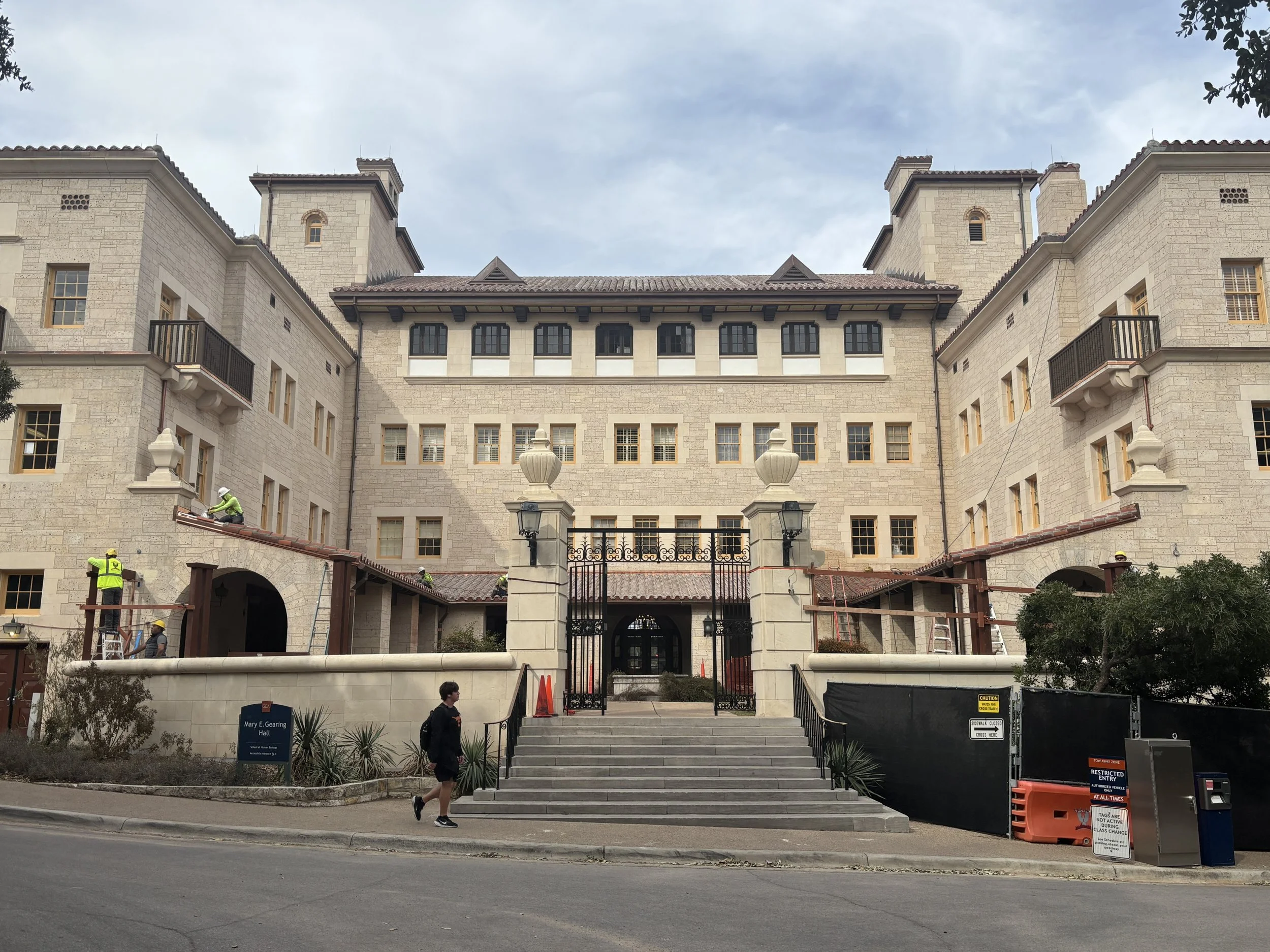
Gearing Hall receiving final touches in January 2026 (courtesy of Kim Barker for The University of Texas at Austin)
With the campus’s early architectural foundations firmly established by these designers, UT moved into the mid-twentieth century with a cohesive identity that still shapes its built environment. Today’s preservation initiatives safeguard that story, ensuring UT’s historical resources remain vibrant, functional, and relevant for future generations. Furthering its commitment to preservation, the University created a dedicated position for this specific effort three years ago. Several major preservation projects highlight this commitment:
GEARING HALL
Final touches are underway on Gearing Hall’s restoration, as its exterior is returned to its historical appearance. The project includes a roof replacement that matches the original clay-tile roof in color, texture, pattern, and installation method. Downspouts have been added to improve drainage, and the building has undergone masonry cleaning and wood window and door restoration. Paint analysis informed the return of the windows and soffits to their original colors.
BATTLE HALL
Often regarded as the crown jewel of campus, Battle Hall is approaching the completion of a major transformation. The exterior restoration earned a Preservation Austin Merit Award in 2023. Current work focuses on the building’s interior, replacing outdated mechanical systems and restoring significant spaces.
The first-floor corridors, which originally featured vaulted ceilings, marble wainscot, and transoms, had been altered when acoustic tile ceilings were installed to accommodate early air-conditioning systems. With a redesigned mechanical system, the corridor ceilings are now being restored to their original height and configuration. The corridor will soon return to its former grandeur with fresh paint, cleaned marble, restored transoms, and new pendant lighting.
Other first-floor restorations include removing non-original partition walls, creating new studio space for architecture students, and adding an elevator to improve accessibility.
On the second floor, the reading room—known for its remarkable interiors—has undergone significant restoration including cleaning floors and exposed wood ceiling beams as well as removing decades of soot on exposed limestone walls. Other enhancements include adding uplighting and restoring historic tables.
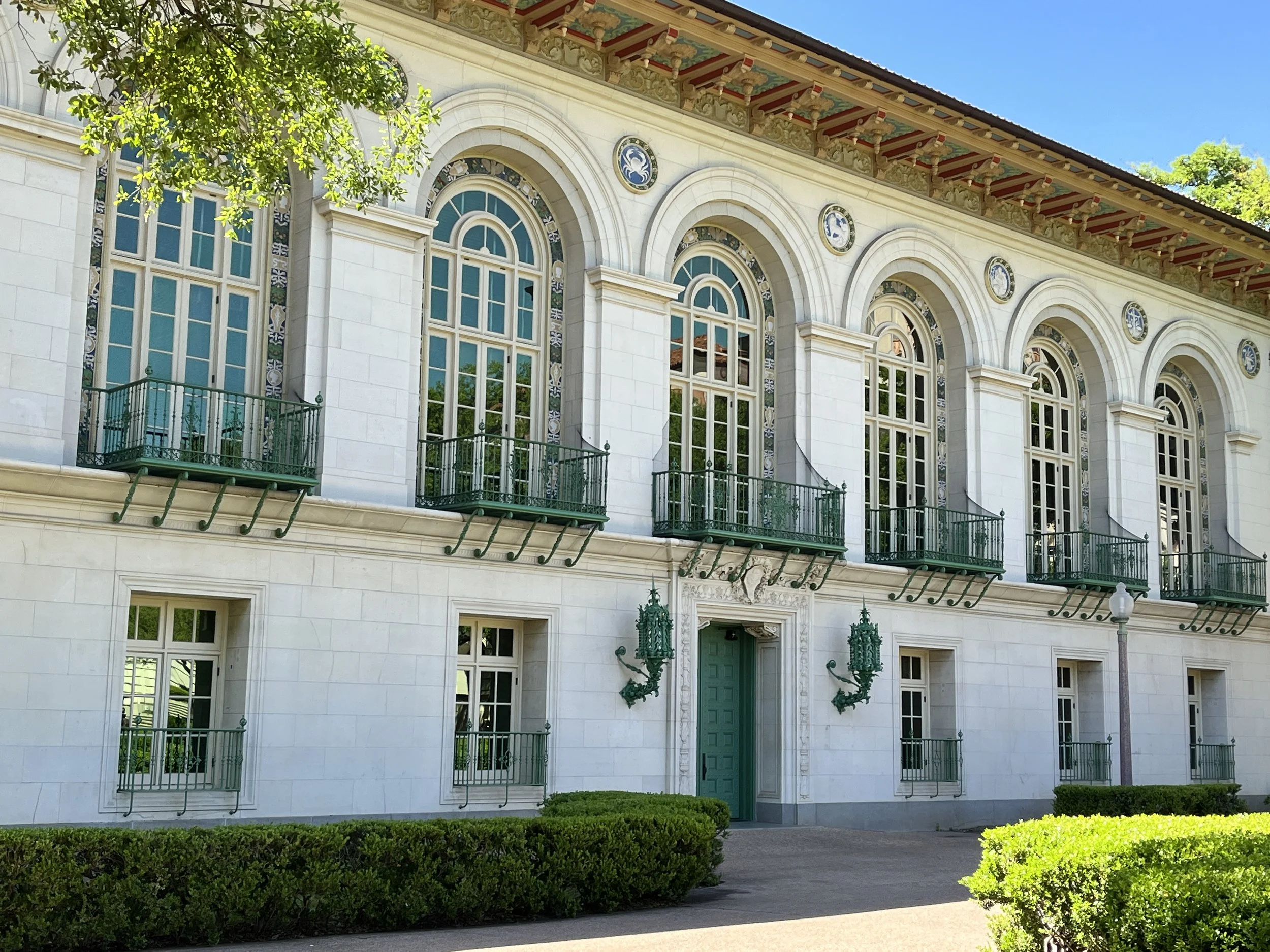
Battle Hall after exterior restoration in 2024 (courtesy of Kim Barker for The University of Texas at Austin)
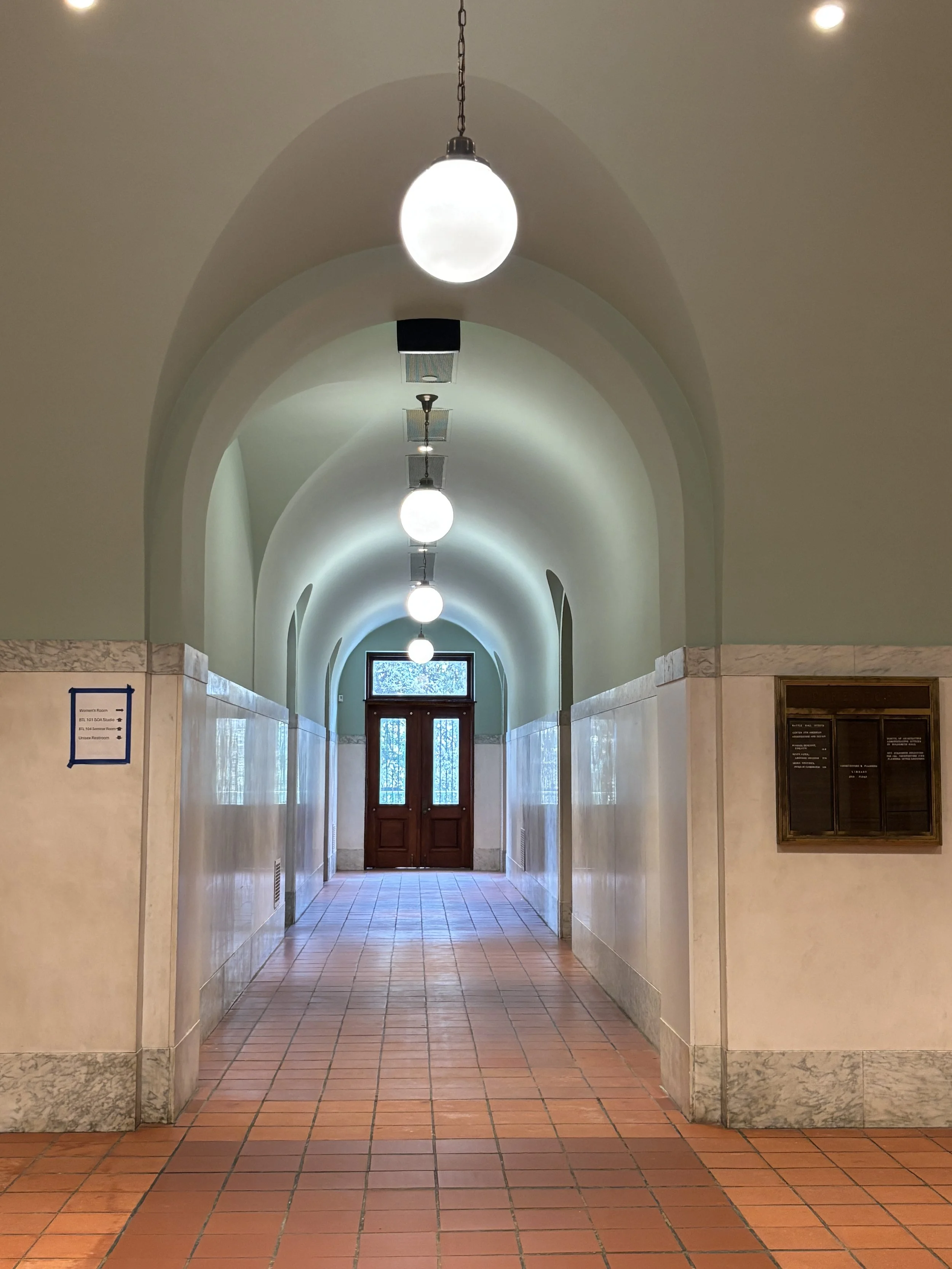
Battle Hall's restored first-floor corridor nearing completion in January 2026 (courtesy of Kim Barker for The University of Texas at Austin)
MAIN BUILDING & TOWER
The Main Building and Tower are undergoing extensive exterior restoration aimed at returning the building to its 1937 appearance. The restoration meticulously aligns with historical records and includes repainting the two-tone finishes, gold-leafing the alphabet letters and the Tower’s topmost stonework, and reconstructing an original balcony balustrade.
The broader scope includes clay-tile reroofing; restoring approximately 1,000 windows; regilding and modernizing the clock mechanisms; cleaning limestone; restoring original paint schemes on concrete soffits and metal elements; enhancing the carillon bells and their mechanisms; modernizing architectural lighting; and replacing non-original east and west entrance doors with custom wood doors.
The results are already visible on the north base of the building, where scaffolding has been removed. Students and visitors regularly stop to admire the cleaned limestone, restored windows and spandrels, and the newly gilded alphabet letters. Scaffolding will continue to move around the building as work advances, with full restoration expected in 2027. More information can be found at tower.utexas.edu.
Preserving UT Austin’s historical resources is about more than aesthetics—it is about honoring the University’s legacy and maintaining a tangible connection to its past. These buildings embody the aspirations and achievements of generations, serving as physical markers of their accomplishments. Through careful restoration and rehabilitation, UT ensures that its architectural heritage continues to inspire future scholars and visitors.
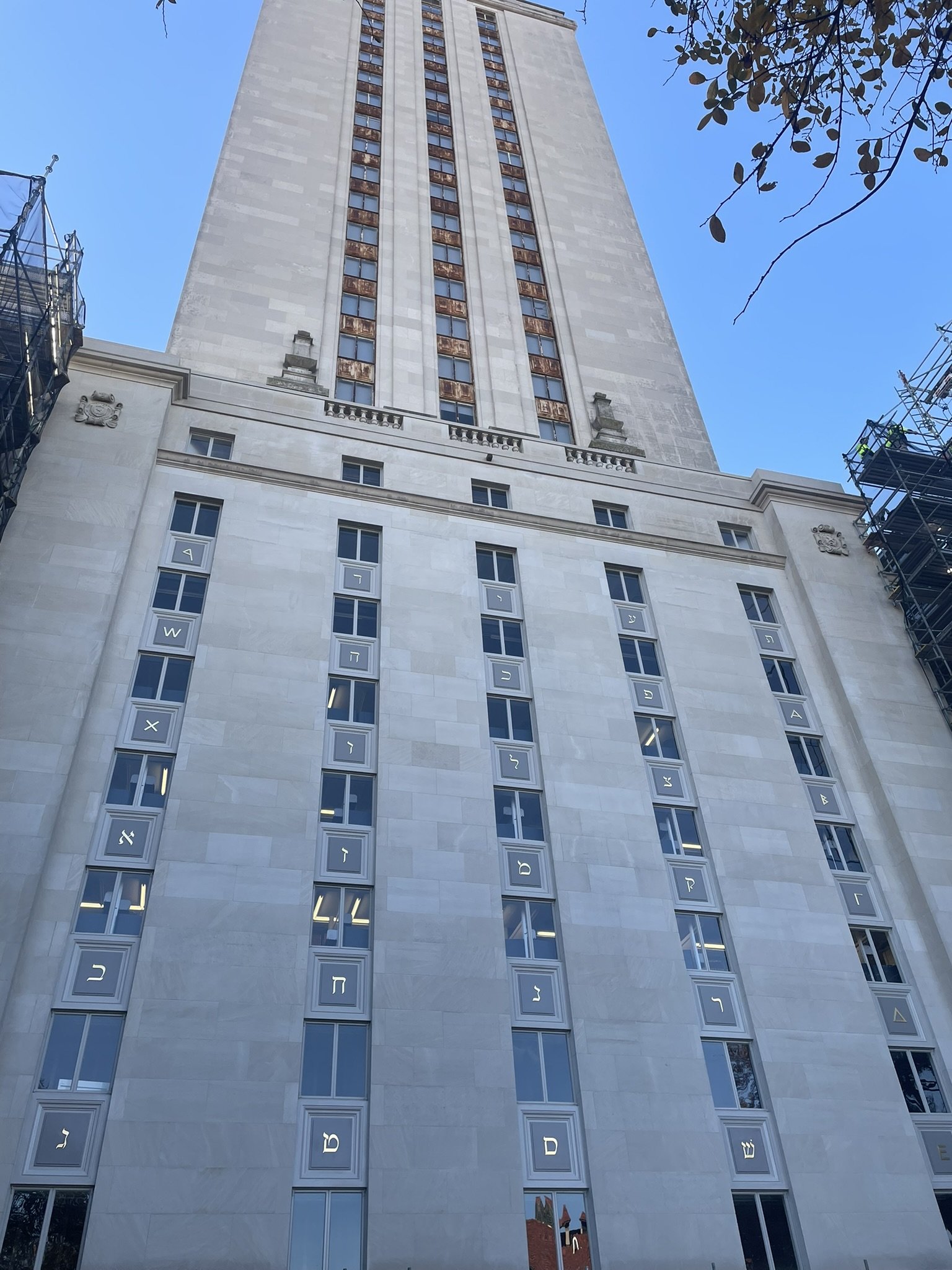
Main Building and Tower after restoration of the lower portion of the north wall in December 2025. The Tower above will be restored in a separate phase. (courtesy of Justin Dothard for The University of Texas at Austin)
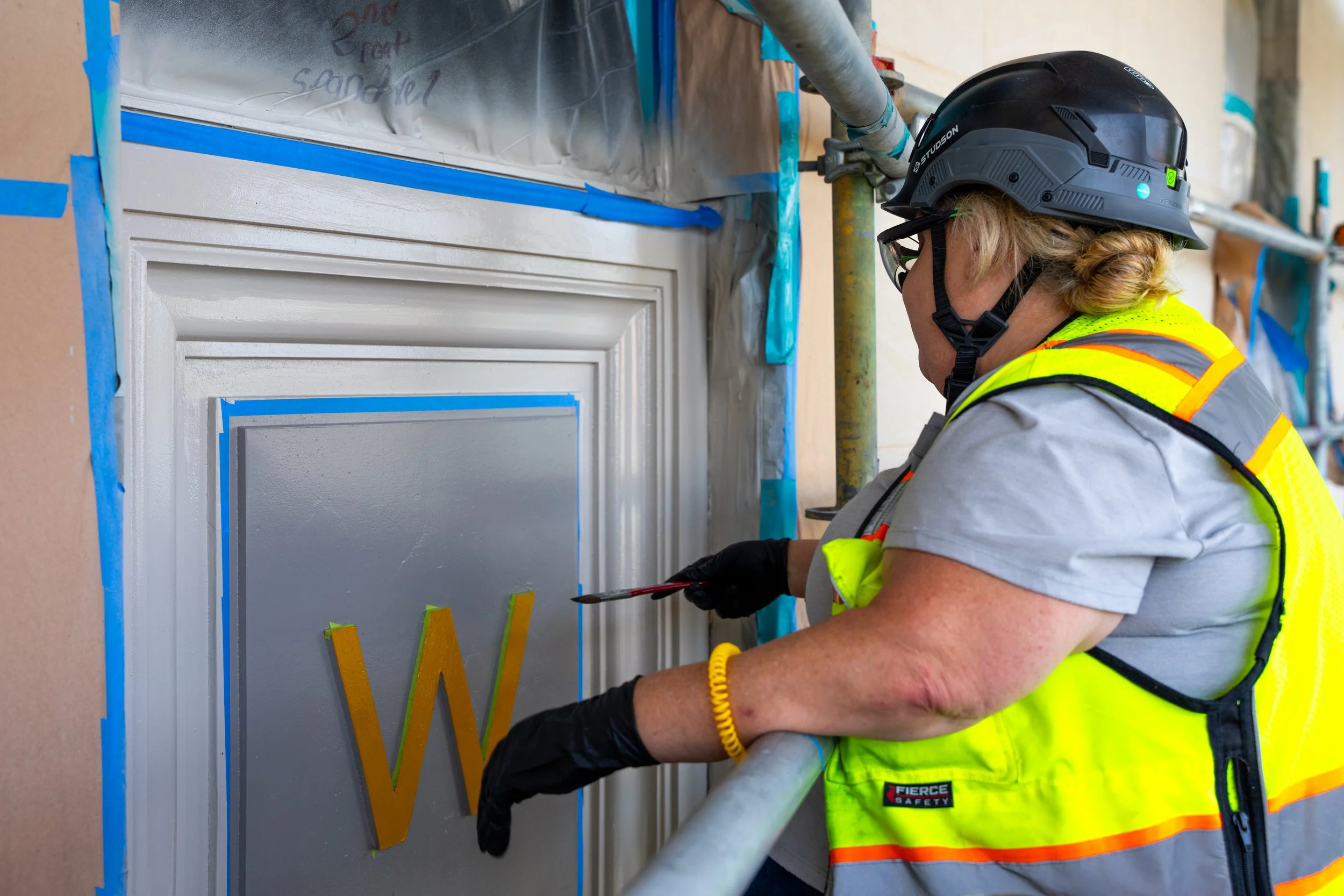
Nancy Morris gilding the alphabet letters on the Main Building and Tower in 2024 (courtesy of The University of Texas at Austin)
Kim Barker serves as The University of Texas at Austin’s first Historic Preservation Planner, bringing more than two decades of experience in preservation and cultural resource stewardship. Her career spans roles as an architectural reviewer for the Texas Historical Commission’s South Texas region, preservation planner for the historic Alamo, and work with the National Park Service and the University of Arizona. At UT, she serves as a key leader and resource on major restoration efforts—including the current Tower and Main Building project—while also overseeing preservation work on the University’s oldest structures, directing a comprehensive survey of all historical resources on campus, and developing a website to highlight UT’s architectural history.