
Catching Up with Sue Spears-Martin

Sue Spears-Martin is a native Austinite and veteran community organizer. Her advocacy for the safety of children in East Austin in the 1990s led to her involvement with Bethany Cemetery, the city’s first cemetery exclusively for African Americans, at that point neglected and overgrown. Since then Sue has been at the helm of the Bethany Cemetery Association, dedicated to safeguarding the site’s rich heritage through preservation and community engagement. Under her leadership the association’s activities have spanned from environmental clean-up days, to research and interpretation, to advocating for the site amid real estate development.
Sue’s work was honored by a Preservation Austin Merit Award for Stewardship in 2024, and she is currently collaborating with our team to pursue City of Austin Historic Landmark designation—further protecting and uplifting this site of profound cultural, historical, and spiritual significance.
The history of Bethany Cemetery dates back more than 100 years and its context has changed dramatically. How does this long history inform your approach to your work?
After learning the history of Bethany, I realized that it holds the stories of enslavement, emancipation, segregation, displacement, and now rapid redevelopment. That long history means that Bethany is not just a burial ground; it is a living archive. Each headstone, unmarked grave, and family name represents resilience of our community across generations. My preservation work honors what came before while ensuring the cemetery remains protected, accessible, and meaningful for future generations. We are not simply maintaining a site; we are safeguarding a legacy in a city that too often forgets its Black history.
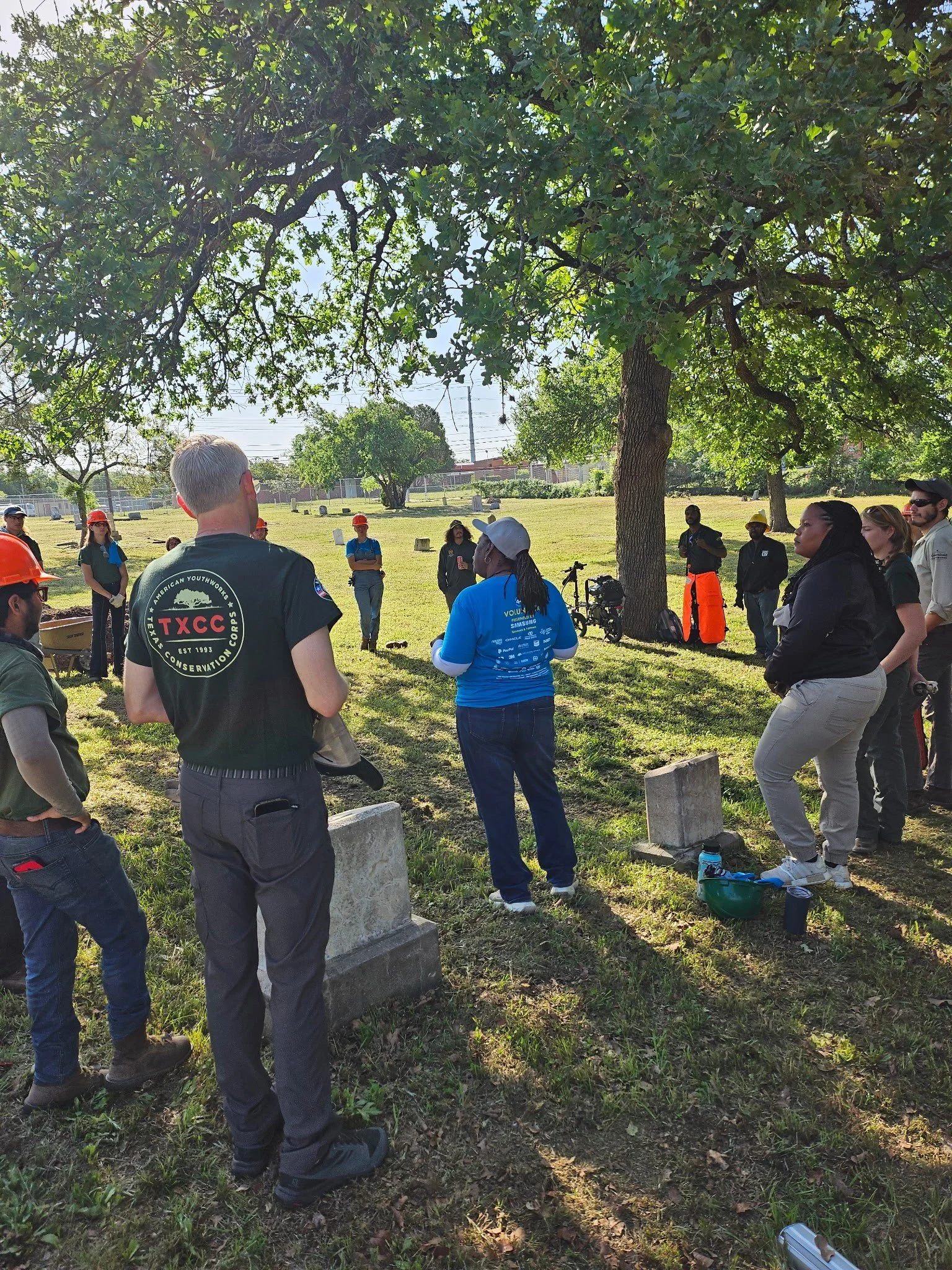
Sue at work at Bethany Cemetery
The stories of the people buried at Bethany are vital to the history of Austin and the broader region. Can you tell us about the process of uncovering and sharing these stories?
Uncovering the stories of the people buried at Bethany Cemetery is not only about the research—which is a big part of it—but also about listening to descendants, elders, who carry memories that were never written down.
The individuals buried at Bethany lived lives that intersected with nearly every chapter of Central Texas history. Many of the graves are unmarked or weathered, so research often requires patience and collaboration. Even small discoveries are treasures that can help restore identity and dignity to someone who might otherwise be forgotten.
Sharing these stories is just as important as uncovering them. Through guided tours, partnerships with organizations like Black Austin Tours, and projects such as our new interpretive signage, we translate research into accessible storytelling. The interpretive sign serves as an on-site classroom, grounding visitors in the cemetery’s history while QR codes allow people to explore narratives digitally in real time.
Ultimately, these efforts ensure that Bethany is not seen as a silent space, but as a place where history speaks. By telling the stories of those buried here, we honor their contributions, educate the public, and affirm that we once had a thriving Black community here in Austin.
As a six-acre site exposed to the elements, your stewardship is as much about environmental restoration as preserving a historical and spiritual legacy—as demonstrated by partnerships with Keep Austin Beautiful, TreeFolks, and Black Austin Tours. To what extent do you find these priorities to be in competition or alignment with one another?
At Bethany Cemetery, environmental restoration and historical preservation are not in competition at all. They are deeply aligned with each other. The people buried here lived lives rooted in the land, so caring for the land where they are buried is a form of honoring their legacy.
Partnerships with Keep Austin Beautiful and TreeFolks help us address maintenance and tree health, while protecting the graves in this sacred space. At the same time, our work with Black Austin Tours connects the public to powerful storytelling, showing visitors how this space carries history and meaning.
The phrase “It takes a village” means that community partnerships and environmental stewardship strengthen preservation. Together, they ensure Bethany remains a respected place of remembrance—one that honors the past while remaining resilient and accessible for the future.
In your three decades working with Bethany, what has surprised you most or been most challenging? What advice would you offer others seeking to make an impact through community organizing and advocacy?
What has surprised me most is how easily places of deep cultural and spiritual significance like Bethany can be overlooked and neglected and even forgotten—and how much persistence it takes to be seen, taken seriously, and get things done. The greatest challenge has been sustaining long-term care with limited resources while advocating for protection in a city that has historically turned a blind eye to the needs of the eastern sector of our city. Preservation work is not a one-time effort; it requires patience, consistency, and the willingness to keep showing up and keep talking even when no one seems to be listening and the progress feels slow or just not moving at all.
My advice to others is to lead with purpose. Stay rooted in the mission and goals you set. Build partnerships with like-minded people who share your passion. You can’t do it all by yourself; it takes a network (the village). Understand that meaningful change does not happen fast but happens over time. When you commit for the long haul, your work becomes part of something larger than yourself—and that is where real change and progress is made.
How can members of the Austin community best support the Bethany Cemetery Association?
The Austin community can support our work by volunteering, donating, and helping us share Bethany’s story. Contributions support ongoing maintenance, preservation, and educational programming, and community members are always welcome to attend tours and stewardship events. To get involved or make a donation, visit bethanycemetery.org or contact bethanycemeteryassociation@gmail.com.
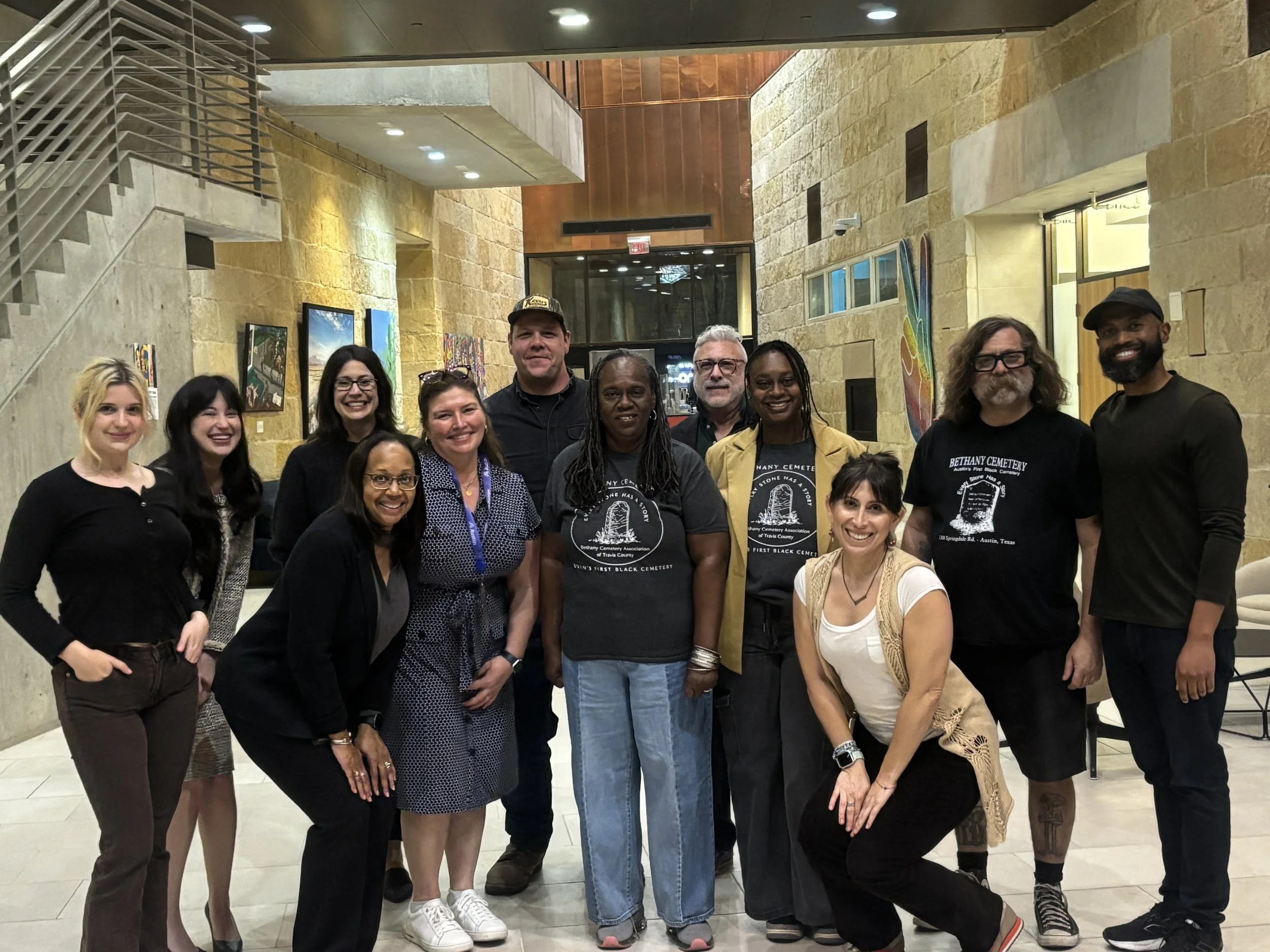
Sue with Preservation Austin Advocacy Committee members and other supporters at City Hall, 2026