
Catching Up with Kim McKnight
This article appeared in Preservation Austin's fall 2025 newsletter. Join or renew as a member to receive future issues straight to your door!

Kim McKnight
Kim McKnight's knowledge of local history runs deep. A native Austinite whose credentials include a Master of Science in Historic Preservation and membership with the American Institute of Certified Planners, she has held leadership roles with the City of Austin Parks and Recreation Department, Texas Downtown Association, and the Texas Main Street Program, and served on the board of Preservation Austin many years ago. In fall 2024 McKnight was named Division Manager of the Historic Preservation Office in the City’s Planning Department. A year into this role, Preservation Austin asked her to reflect on the challenges and opportunities for preservation in Austin today.
How have your past roles and experience informed your approach at the Historic Preservation Office?
I am thrilled to be part of the talented team at Austin’s Historic Preservation Office. Although I have over 25 years of experience in the field, this new role presents exciting challenges and opportunities for growth, and I am eagerly learning every day.
In my previous role with the Parks and Recreation Department, I managed historic and cultural resources, led planning efforts for historic sites, and worked closely with community members and nonprofit partners on stewardship projects. In my work with the Texas Main Street Program and Texas Downtown Association, I saw firsthand that the most successful cities were those that galvanized community members around a shared vision for the future and invested in building organizational capacity through sufficient staffing.
I’ve spent years caring for cultural landmarks, guiding preservation projects, and connecting people around a shared sense of place. Along the way, I’ve learned how important it is to have the capacity and resources to bring big ideas to life. That’s what I’m excited to carry forward in supporting the Historic Preservation Office—preserving Austin’s heritage as we navigate the opportunities and pressures of a rapidly changing city.
You started this role the same month that City Council adopted the Equity-Based Preservation Plan. What’s ahead for the plan and its implementation?
The Historic Preservation Office has launched a progress dashboard for the Equity-Based Preservation Plan, which was adopted by City Council in November 2024. The dashboard’s metrics will track forward momentum on the plan’s recommendations, which were authored by a community working group in collaboration with community organizations, stakeholder groups, and more than 15 City departments, and with feedback from thousands of Austinites. The progress dashboard is available through the Historic Preservation Office webpage, with the option to sign up for updates.
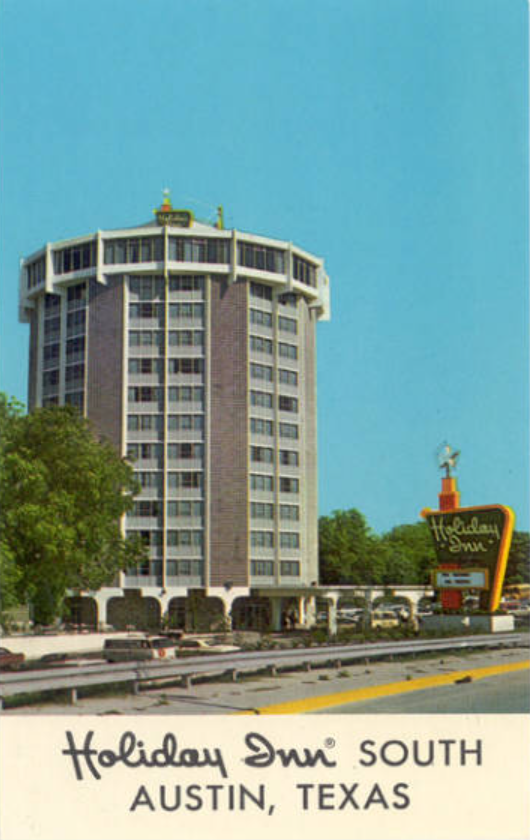
1964 postcard showing the Holiday Inn designed by Leonard J. Lundgren, featured in the first installment of Your Austin Landmarks. Source.
Are there specific historic sites that the community should be watching right now?
The Historic Preservation Office has released the first installment of its Your Austin Landmarks video series! We invite residents and visitors to share their stories of iconic places around town, whether or not they are designated historic landmarks. The series kicked off with a feature about a local hotel that was one Austinite’s beacon when visiting the city as a child and a piece about generational ties to Oakwood Cemetery. We’d love to hear from the community about places that are special to them.
In other exciting news, we have a new historic resource survey for downtown Austin! The survey aims to capture Downtown's rich history by evaluating more than 1,300 buildings that are at least 45 years old as potential historic landmarks and historic districts. Through detailed fieldwork, research in historical archives, and community outreach, the survey creates a comprehensive record of Downtown's built heritage. It also identifies key historic buildings and districts that could help draw more heritage tourists to Austin. We plan to update the 2016 East Austin Historic Resource Survey soon. Both surveys are planning tools only and do not include zoning changes, land use changes, or property tax adjustments.
How are broader developments across the city–like Project Connect, the HOME code amendments, and I-35 Cap and Stitch Program–impacting historic preservation? How is the Historic Preservation Office responding and adapting to these developments?
We review major infrastructure projects to determine if there are impacts to historic resources and, if so, how to minimize those impacts. Current projects include Project Connect, MoPac South, I-35 Capital Expressway, and the associated Cap and Stitch project. Our office consults on and provides regulatory oversight of projects that impact Congress Avenue, East 6th Street, and historic civic infrastructure and buildings such as bridges, parks, and municipal buildings. We work closely with colleagues in the Planning Department, Development Services Department, and Law Department on land development code amendments. During the Texas legislative session, we provide analysis of bills that may help or harm historic preservation efforts. We do all of this while simultaneously managing a very large caseload of historic review and zoning cases with a small regulatory staff.
Looking to the year ahead, what are your greatest concerns and needs in the Historic Preservation Office, and what excites you most?
We have some exciting things in the works for the coming year! We plan to kick off a ten-year update of the East Austin Historic Resource Survey, which will capture important changes since the survey was completed. We are also launching a quarterly talk show called We Saved You a Place with ATXN, the City’s government access channel, that will feature topics related to historic preservation in a changing city. Finally, we are looking forward to a Preservation Plan Summit in November to review the past year of progress and upcoming goals with key collaborators.
To stay informed about the Historic Preservation Office, Preservation Austin supporters can sign up for our newsletter through this link.